
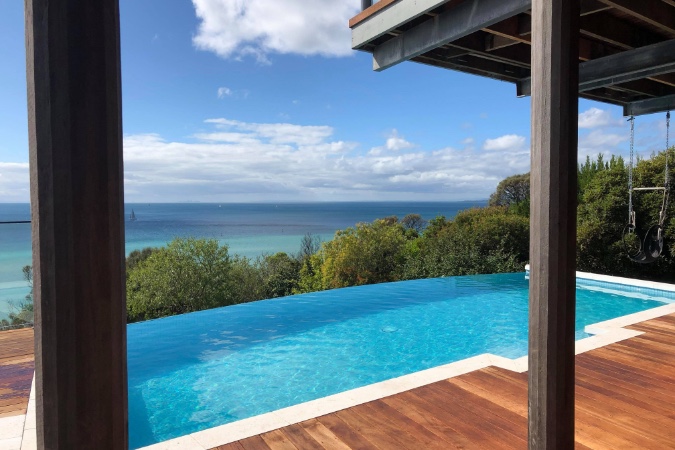
Ask ten pool owners which type they’d choose again and you’ll get ten different answers. Some swear by fibreglass. Others wouldn’t build anything but concrete. Both are solid options. They just suit different budgets, blocks, and priorities. If you’re in the early stages of planning a pool for your Melbourne or Mornington Peninsula property, this guide lays out the real differences. No sales pitch. Just the stuff that actually matters when you’re spending $50,000 to $120,000 on your backyard.
How each type is built: and why it matters
The construction method is where fibreglass and concrete part ways, and it explains most of what follows. Fibreglass pools are manufactured off-site in a factory mould. The shell arrives at your property in one piece, gets craned into the excavated hole, and is connected to plumbing and equipment on site. Most fibreglass installations run 2 to 6 weeks from the day the shell arrives. Concrete pools are built entirely on site. A steel reinforcement cage goes in first, then shotcrete (a high-pressure concrete mix) is sprayed around it and shaped. After that comes curing, rendering or tiling, and finishing. Start to swim, a concrete build typically takes 10 to 16 weeks. In Melbourne, weather delays are common enough to factor in. Neither approach is better by default. But those timelines and methods have real implications depending on your situation.
Cost comparison
Full project costs in Melbourne (covering excavation, installation, compliant fencing, basic paving, equipment, and council permits) generally look like this:
| Pool type | Typical cost range | Build time |
|---|---|---|
| Fibreglass inground pool | $50,000 – $80,000+ | 2 – 6 weeks |
| Concrete inground pool | $65,000 – $120,000+ | 10 – 16 weeks |
| Plunge pool (fibreglass) | $30,000 – $55,000+ | 2 – 4 weeks |
One thing to watch for: shell-only fibreglass quotes sometimes appear as low as $25,000–$35,000. They exclude excavation, fencing, paving, and compliance costs. Always ask what a quote actually covers before comparing numbers between builders. Concrete costs more because it takes more labour, more time on site, and more trades. Whether that premium is worth it depends on what you need from the build. For a full breakdown of what goes into pool pricing, see our pool installation page.
Ongoing maintenance costs
The purchase price isn’t the only financial consideration. What you spend running and maintaining a pool over 10, 15, or 20 years adds up significantly. Fibreglass has a smooth, non-porous gel coat surface. Algae struggles to take hold, which means lower chemical use, less cleaning, and lower running costs year to year. The surface doesn’t need resurfacing under normal conditions. Concrete is porous. Algae and bacteria can work their way into the surface, so you’ll typically use more chemicals and spend more time maintaining the water. Concrete pools also need resurfacing every 10 to 15 years, a cost that can run to $10,000–$20,000+ depending on the finish. How much that gap matters over time varies by buyer. For some it’s a significant factor. For others it’s a cost they’re comfortable accepting in exchange for what concrete offers. Worth having eyes open on either way.
Design flexibility
This is where the two options genuinely diverge. Fibreglass pools come in shapes and sizes determined by the manufacturer’s moulds. Rectangular, freeform, lap pools, plunge pools. The range covers most standard Melbourne blocks. But it is a finite range. If your block has an unusual shape, or you need specific dimensions that don’t correspond to an available mould, you may find fibreglass limiting. Concrete can be built to virtually any specification. Custom dimensions, irregular shapes, integrated spas, varying depths. All of it is possible. For homeowners where the design is central to the whole project, that freedom is meaningful. Whether design flexibility actually matters depends on your block and your vision. A lot of buyers assume they need more customisation than they do once they see the range of available fibreglass shapes.
How Melbourne’s climate factors in
Melbourne throws a lot at outdoor structures: hot dry summers, cold wet winters, and everything between. Both pool types handle the climate well when properly built. Fibreglass expands and contracts slightly with temperature changes without cracking. The gel coat is UV-resistant and chemically stable over time. Concrete is structurally very robust, but its surface finish can be more susceptible to staining, algae penetration, and minor cracking if water chemistry isn’t consistently maintained. That’s not a reason to avoid concrete; it’s a reason to stay on top of maintenance. Both pool types, built correctly by a licensed builder, are designed to last 20 to 30 years or more in Melbourne conditions.
Build time and disruption
Worth thinking about carefully, especially if you’re working toward a specific season. Fibreglass installations are concentrated disruptions: a few weeks of activity, then done. Concrete builds involve multiple trades coming and going over several months. Not a dealbreaker for most people, but if you’re working toward a summer deadline or you’re sensitive to ongoing disruption at home, the difference is real. Melbourne’s weather is also more of a factor with concrete. A run of wet weather during curing can add weeks to the timeline. With fibreglass, once the shell is in the ground, rain is largely irrelevant.
A practical decision framework
Rather than telling you which to choose, here are the questions worth sitting with:
- Does your block accommodate a standard fibreglass shape? Most do. If yours has an unusual configuration, concrete opens up more options.
- How important is the design of the pool itself? Specific custom dimensions or unusual shapes point toward concrete. If you’re open to available shapes, fibreglass delivers a strong result.
- What’s your timeline? Fibreglass gives more certainty on completion dates. Concrete builds can stretch, particularly through winter.
- How do you weigh upfront cost vs ongoing cost? Concrete has a higher entry price and higher ongoing maintenance. Fibreglass costs less upfront and less to run. Over a long ownership period that gap is real.
- What matters most in the finished result? Both are quality options. Knowing what you’re actually optimising for makes the decision clearer.
What about plunge pools?
Plunge pools are available in both fibreglass and concrete, and the same considerations apply. Fibreglass plunge pools are faster and more affordable, typically $30,000 to $55,000 for a complete installation. Concrete plunge pools suit buyers who need a very specific fit for their outdoor space. For smaller Melbourne and Mornington Peninsula backyards, a well-designed plunge pool paired with quality decking or a pergola can create a genuinely impressive outdoor space without needing a large footprint.
Want to talk it through?
Sometimes the easiest way to decide is to have someone look at your block and walk through what’s realistic. James and the team at Precision Outdoor Living build both fibreglass and concrete pools across Melbourne and the Mornington Peninsula, and can give you honest advice on which option suits your site. Book a free on-site assessment here.
Frequently asked questions
Is fibreglass or concrete better for Melbourne’s climate?
Both handle Melbourne’s climate well when properly built. Fibreglass expands and contracts without cracking and has a UV-stable surface. Concrete is structurally robust but requires more maintenance to keep the surface in good condition over time. Neither is a poor choice for local conditions.
Which pool type costs less to maintain?
Fibreglass generally costs less to maintain year to year. Its non-porous surface requires fewer chemicals and less cleaning. Concrete pools typically use more chemicals and require resurfacing every 10 to 15 years, a significant recurring cost fibreglass owners don’t face.
How long does each pool type take to build?
Fibreglass pools typically take 2 to 6 weeks to install. Concrete pools take 10 to 16 weeks. Both timelines follow council permit approval, which adds several weeks before construction begins.
Can fibreglass pools be built in custom shapes?
Fibreglass pools come in a wide range of shapes from the manufacturer’s moulds, but the range is finite. For fully custom dimensions or unusual configurations, concrete offers more flexibility.
Do both types need a building permit in Victoria?
Yes. All inground pools in Victoria require a building permit and must comply with pool barrier regulations under the Building Regulations 2018. A licensed pool builder should manage this on your behalf.
What is the most affordable inground pool option in Melbourne?
A fibreglass plunge pool is typically the most affordable inground option, starting from around $30,000 for a complete installation. Standard fibreglass inground pools start from around $50,000.


